What Are the Benefits of Foraging? An Honest Look at Wild Food
Food nobody has farmed or sprayed, wild greens with some surprising figures behind them, and far more plants than the shops will ever sell. Here’s what the evidence says about the benefits of foraging, and where it runs out.
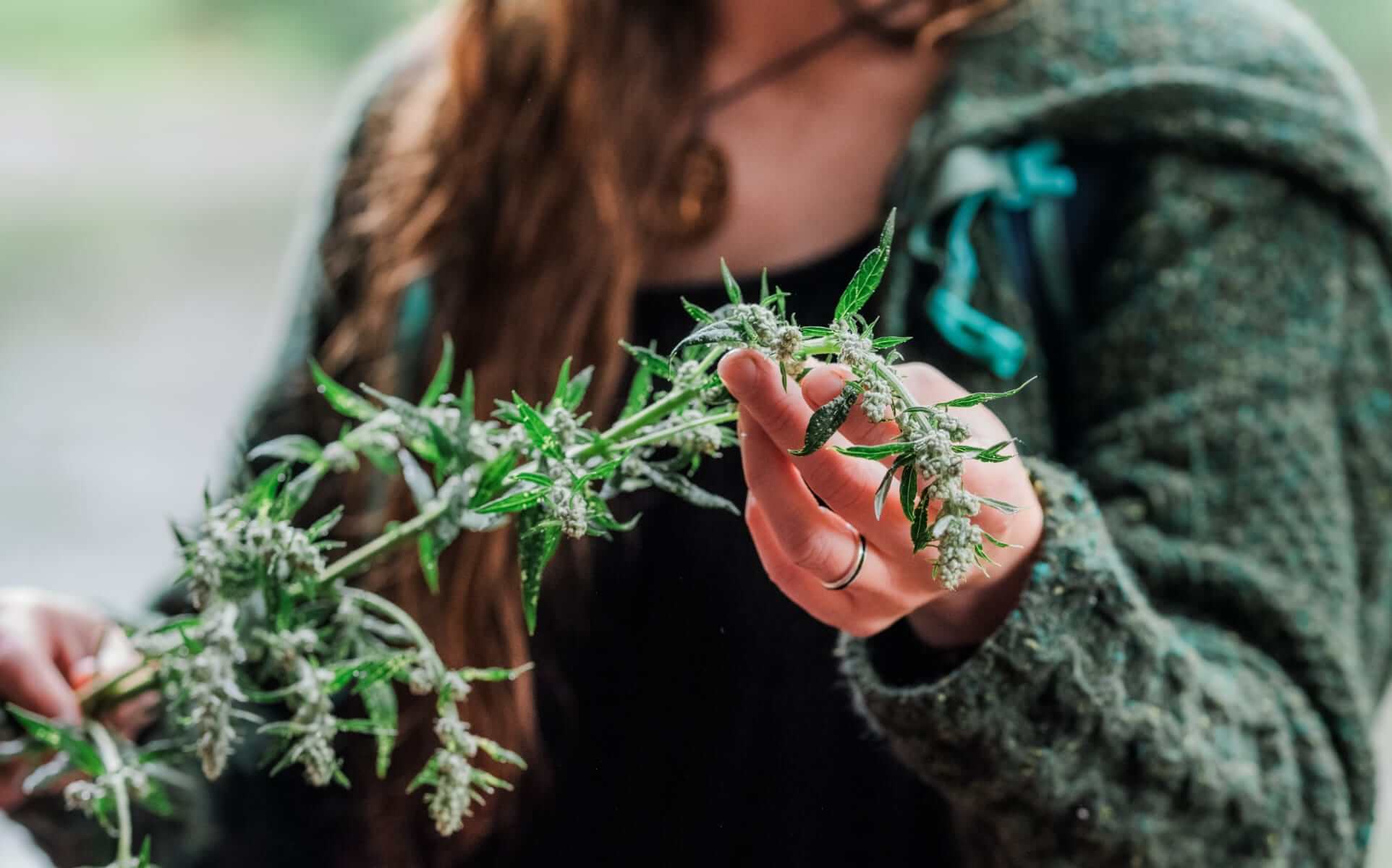
I’m Bex Northman, a forager and Member of the Association of Foragers, and I teach foraging in the woods and along the coast of Cumbria, Northumberland and the Scottish Borders. People often ask me what’s actually good about wild food. It’s a fair question, and it deserves a straight answer rather than the “superfood” talk you’ll find elsewhere. So I’ve gone to the sources: government pesticide testing, nutrient databases and the research behind them. Here’s what holds up.
Why I forage
I started foraging because I wanted better food for my family. Not fancier food: food I knew the story of, picked from places I knew hadn’t been sprayed, with flavours you simply can’t buy.
Is wild food unsprayed?
Wild plants aren’t farmed. Nobody sows a nettle patch, feeds it fertiliser or sprays it to keep the insects off, and that’s a real difference from most of what we buy.
In the government’s 2024 testing, about 6 in 10 samples of fruit and vegetables in Great Britain carried at least one pesticide residue. To be fair to growers and shops, almost all were within legal limits (under 3% were over), and every residue found is checked for risk to the people eating it. The testing also focuses on foods where residues are expected, so it isn’t a snapshot of everything on the shelves. Pesticide Action Network UK, a campaign group, looked back over the same government data from 2020 to 2024: 81% of pre-packed salad samples and 81% of herb samples carried two or more residues.
But wild doesn’t automatically mean clean. Councils use weedkiller on pavements, road verges and parks. Spray can drift from fields into the hedgerows beside them. And busy roads leave traces of metals in the ground nearby. When researchers in Kent tested blackberries picked beside a main road, every sample was well within the guideline limits for copper, lead and cadmium, and washing brought the lead down further. But they’re clear their results don’t cover every roadside or every berry. Soil in towns can hold lead too: closer to home, a Newcastle study found lead above the UK guideline in almost every allotment soil it tested. How much reached the crops varied from plant to plant, and the gardeners’ own blood lead was no higher than their neighbours’.
So where you pick matters as much as what you pick. Choosing a clean spot is part of what I teach on every walk, right alongside identification.
Nettles and dandelions vs spinach: what the figures say
Some of the commonest wild greens have remarkable figures behind them. The UK’s official food tables don’t include nettles or dandelions at all, so the table below takes the three shop greens from the UK tables, and the two wild greens from the US Department of Agriculture’s database, which does list them.
On a phone, swipe the table sideways to see every column.
| Per 100g | Calcium | Iron | Vitamin C | Vitamin K | Folate |
|---|---|---|---|---|---|
| Dandelion leaves (raw) | 187mg | 3.1mg | 35mg | 778µg | 27µg |
| Stinging nettles (blanched) | 481mg | 1.6mg | not measured | 499µg | 14µg |
| Spinach (raw) | 170mg | 2.1mg | 26mg | 394µg | 114µg |
| Curly kale (raw) | 130mg | 1.7mg | 110mg | 623µg | 120µg |
| Lettuce, UK average (raw) | 24mg | 0.1mg | 1mg | 129µg | 60µg |
Weight for weight, dandelion leaves have at least as much calcium as spinach, more iron and vitamin C, and about twice its vitamin K. Blanched nettles have nearly three times spinach’s calcium. It isn’t a clean sweep, though: spinach has about four times dandelion’s folate, and kale has about three times its vitamin C.
What these figures don’t show:
- They compare different plants, not wild and farmed versions of the same plant. There’s no good evidence that a wild-picked leaf beats a farmed one of the same kind.
- Nutrients vary with the soil, the season and the age of the leaf. These are single values from two different databases, so small differences are only a rough guide.
- 100g isn’t a portion. Nettles cook right down, and dandelion leaves are bitter, so they’re usually eaten in smaller amounts.
- Figures on a page don’t tell you what a food does for you. I’m a forager, not a nutritionist, and I won’t pretend otherwise.
Far more plants than the shops sell
More than 6,000 plant species have been grown for food, yet just nine crops make up two-thirds of all the crops the world produces, according to the United Nations’ food and farming agency, the FAO. Most of the world’s food now comes from a remarkably short list.
Foraging adds plants you’ll rarely find on a supermarket shelf. On a half-day walk with me you’ll learn to identify 15 to 20 wild edible plants, and more than 30 on a full day, each with its own flavour and its own season.
Why does plant variety matter? The research on eating a wide range of plants is a story of its own, and I’ve written it up separately: 30 Plants a Week: What the Research Says, and Why Wild Plants Count.
The benefit that lasts: knowing what you’re looking at
Every benefit on this page depends on one thing: being certain what you’ve picked. Some of our most dangerous wild plants look a lot like edible ones, and a photo in a book isn’t enough to tell them apart. That’s why I’d never suggest starting on your own.
On a Foraging Walk I’ll show you how to identify each plant properly, which look-alikes to rule out, and how to pick so there’s plenty left for wildlife and for next year. You’ll go home with a skill you can use every time you step outside.
Ready to start foraging?
Half-day and full-day walks through Cumbrian woodland and along the coast, for complete beginners upwards. More questions? Read the FAQs →
I’m Bex Northman, a Member of the Association of Foragers. I teach foraging and herbal remedy making across Cumbria, Northumberland and the Scottish Borders. More about me →
About this page. This page is for general interest and education only. It isn’t nutritional or medical advice. Never eat a wild plant unless you’re certain what it is. If you’re pregnant, taking medication or have a health condition, talk to a healthcare professional before making changes to your diet.
Sources
- UK competent authorities for pesticide residues in food: annual report for 2024 (HSE, November 2025)
- The Dirty Dozen 2025 (Pesticide Action Network UK)
- Which pesticides are being used by UK councils? (Pesticide Action Network UK)
- Longley and Sotherton (1997), spray drift into field boundaries and hedgerows, Environmental Toxicology and Chemistry (summary)
- Chamberlain and others (2024), heavy metals in washed and unwashed roadside blackberries, Integrated Environmental Assessment and Management
- Entwistle and others (2019), gardeners’ lead exposure on Newcastle allotments, Environment International
- McCance and Widdowson’s Composition of Foods Integrated Dataset 2021 (spinach, mature, raw 13-572; curly kale, raw 13-234; lettuce, average, raw 13-520)
- USDA FoodData Central (dandelion greens 169226, stinging nettles 169819)
- The State of the World’s Biodiversity for Food and Agriculture (FAO, 2019)